Edit This Story
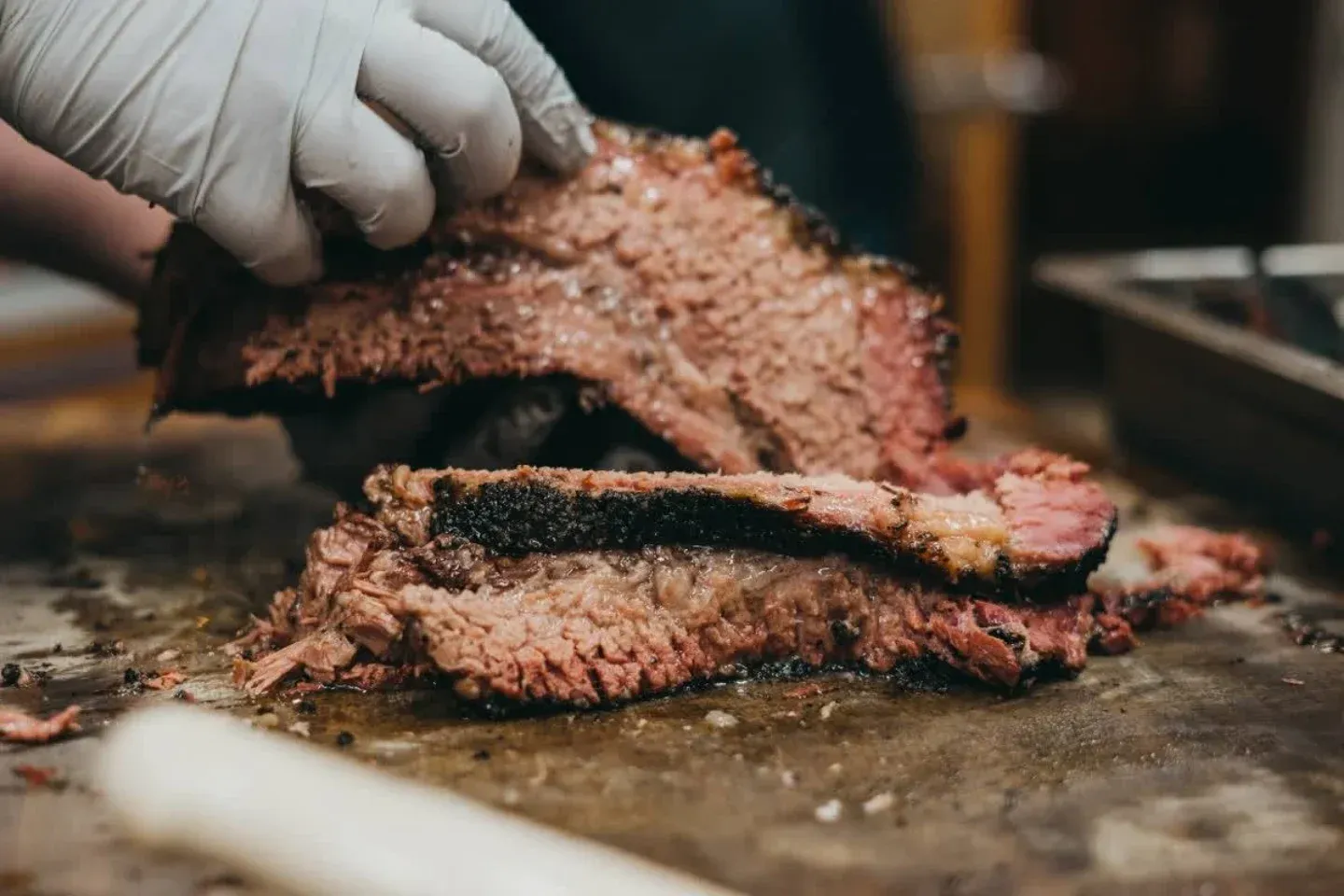
The Sacred Smoke Ring: Nature’s Perfect Harmony
The coveted pink ring in smoked meat—that prized layer beneath the bark—stands as nature’s timestamp, a chemical signature of patience and precision. This rosy band, often reaching a quarter-inch deep, isn’t just aesthetically pleasing; it’s scientific evidence of a perfect marriage between smoke, time, and protein.
During the 18-hour journey, a remarkable chemical dance unfolds. As wood smolders at precisely controlled temperatures, it releases nitrogen dioxide, which dissolves on the meat’s moist surface to form nitric acid. This acid penetrates the meat’s outer layers, interacting with myoglobin—the protein responsible for meat’s color. This interaction creates the celebrated smoke ring, a pink badge of honor that tells the story of proper technique and unwavering dedication.
Above this ring, another transformation occurs—the formation of the bark, that intensely flavored, deeply colored crust that drives barbecue enthusiasts to near-religious devotion. This bark develops through a complex interaction of spices, proteins, and smoke particles. The Maillard reaction between proteins and sugars creates hundreds of new flavor compounds. At the same time, the spice rub slowly dehydrates and concentrates, forming a crust that’s intensely savory, slightly sweet, and undeniably crave-worthy. Our attraction to bark isn’t just about taste—it’s about texture, too. The contrast between the crunchy, chewy exterior and the tender meat beneath speaks to our primitive desire for varied mouthfeel and concentrated flavors.
The process works differently across various types of meat, each offering its unique canvas for smoke’s artistry. With its dense muscle fibers and generous marbling, beef brisket develops a particularly pronounced ring and a robust, pepper-forward bark that becomes nearly black with complexity. The high myoglobin content in beef makes it especially receptive to this chemical reaction. As the brisket passes through the critical temperature window between 100-140°F (38-60°C), the smoke ring formation is most active, while the bark continuously develops its intensely flavored crust.
With its lighter muscle tissue, Pork produces a more subtle but equally prized ring and a sweeter, mahogany-colored bark. During the long smoke, the fat gradually renders, basting the meat from within, while the external surface develops a beautiful crust often sticky with caramelized sugars. The smoke ring in Pork serves as a boundary between this bark and the succulent meat beneath, marking where the smoke’s influence ends and pure, unadulterated Pork begins.
Poultry’s unique characteristics are smoke ring formation and bark development. Chicken and turkey have less myoglobin than red meats, but they can still develop a delicate pink ring when appropriately smoked. Their bark manifests as a golden-brown, seasoned skin that becomes paper-thin and crispy—a textural delight that makes the first bite irresistible.
Ham, already cured with nitrites, presents an interesting case where the smoking process enhances and deepens the existing pink coloration while creating a glossy, lacquered exterior that’s more subtle than traditional bark but equally appealing. The 18-hour smoke adds layers of flavor while intensifying the ham’s characteristic color, creating a harmonious fusion of cure and smoke.
The magic of this long smoking process lies not just in the visible ring and bark but in how it fundamentally transforms the meat’s texture and flavor. As proteins slowly denature over those 18 hours, collagen converts to gelatin, creating that sought-after tenderness. Meanwhile, continuous exposure to clean smoke creates layers of complex flavors—sweet, savory, and everything in between—that cannot be replicated through faster cooking methods.
This pink ring and its crowning bark are visual metaphors for the pitmaster’s commitment to their craft—a reminder that some things cannot be rushed, only respected and given the time required to reach perfection.