Edit This Story
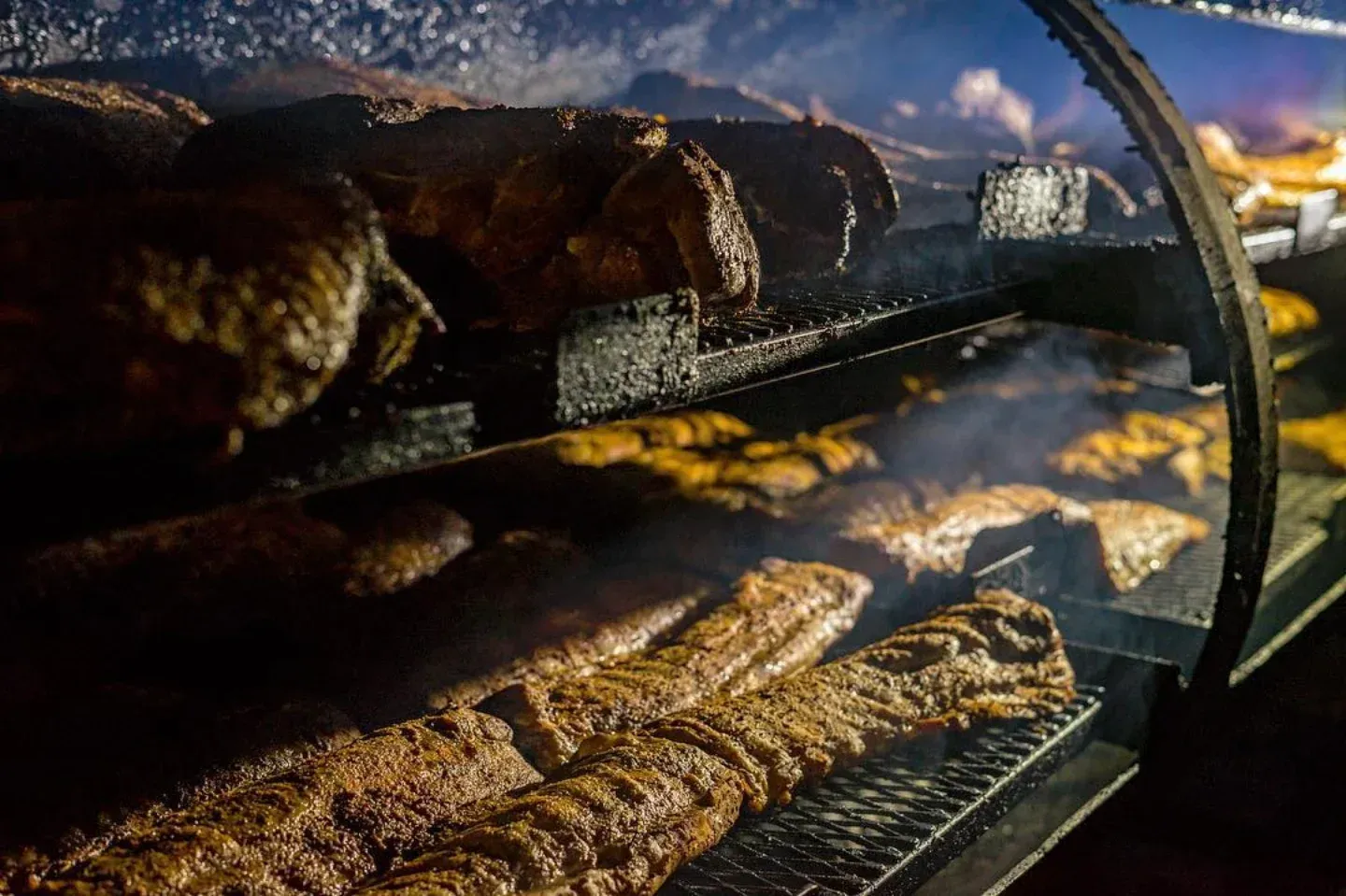
The Primal Call of Smoke and Fire
When the smoke rises from smoldering wood and meat, it awakens something ancient within us. The aroma of barbecue isn’t just a pleasant smell—it’s a primordial signal that speaks to the deepest parts of our evolutionary memory, triggering responses that date back to humanity’s first encounters with cooked food.
The complex bouquet of smoked meat—a symphony of rendered fat, caramelized proteins, and aromatic compounds from burning hardwoods—triggers an intense physiological response. Our salivary glands activate instantly, preparing our bodies for the feast. This reaction isn’t merely physiological; it’s deeply rooted in our species’ history of survival and community.
The Maillard reaction, which occurs as meat proteins and sugars transform under heat, produces hundreds of aromatic compounds. These molecules tell our brains a story of sustenance, of protein-rich food made safe through the purifying power of fire. Our ancestors learned that smoke meant safety—fire killed harmful bacteria and parasites, making meat edible, more digestible, and nutritious.
But beyond the biological imperative, the scent of smoking meat carries profound social significance. In our ancestral past, a successful hunt followed by the smoking of meat meant survival not just for one but for many. The process of smoking meat—slow, methodical, requiring patience and skill—became a cornerstone of community life. It demanded cooperation and encouraged sharing, as the bounty was too much for any family to consume before spoilage.
Today, when we catch that first whiff of brisket smoking in the backyard, we’re drawn together just as our ancestors were. The aroma becomes an invisible thread, pulling family members from their rooms, neighbors from their homes, and friends from their daily routines. There’s something magnetic about it, something that speaks to our need for connection and community.
Watch any gathering around a smoker or barbecue pit—people naturally cluster, sharing stories, offering opinions on technique, and passing down knowledge. Smoking meat transcends mere cooking; it becomes a ritual of communion. Whether it’s ribs, brisket, pork shoulder, or chicken, the process creates a focal point for human connection, an excuse to slow down and be together.
The smell of smoked meat triggers more than hunger—it awakens a deeply embedded memory of community, sharing, and belonging. It reminds us that some of our most meaningful moments happen when we gather around food that has been lovingly prepared over many hours, transformed by smoke and time into something that nourishes both body and soul.